Skewness is the degree of asymmetry or lack of symmetry of a distribution. Skewness is the slope of the data distribution. In a non-symmetrical distribution, the means, medians, and modes are not equal in magnitude, causing the distribution to concentrate on one side and the curve to skew.
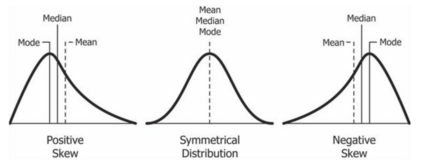
Types of skewness
In skewness, there are 3 types of skewness, namely positive, negative, and neutral skewness. We can determine if a curve has a positive, negative or neutral skewness value using the skewness coefficient :
- If the skewness coefficient is < 0, the shape of the distribution is negative (shorter left tail).
- If the skewness coefficient = 0, then the shape of the distribution is symmetric.
- If the skewness coefficient is > 0, the shape of the distribution is positive (shorter right tail).
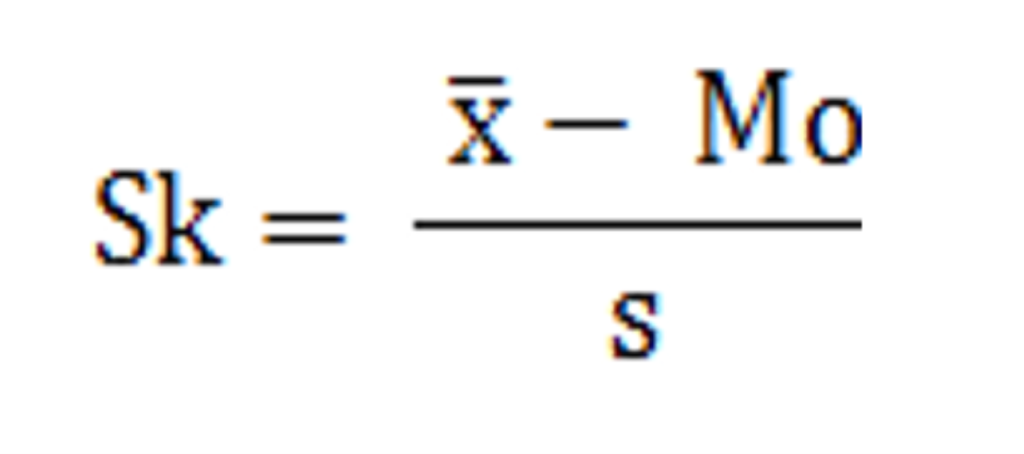
Skewness Formula
Notes :
Sk = Skewness Coefficient
Mo = Modus Value
x = Average Value
Case Study
One example of the application of skewness in wealth distribution in Indonesia, in 1993 it had a skewness value of 14.25. While in 2007, the skewness value was 4.97. The graphs show that both graphs have positive values
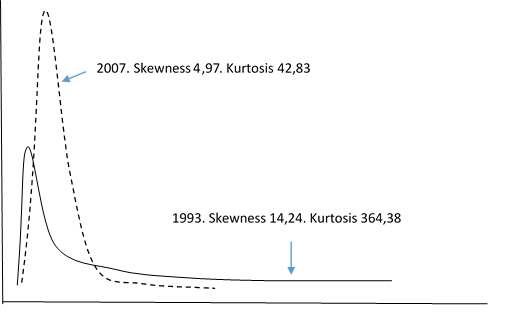
When comparing the graphs in 1993 and 2007, the curve in 1993 has a skewness value of 14.24, this curve has a more sloping shape when compared to the curve in 2007 which has a skewness value of 4.97 in this year the distribution of the population with high wealth is more than in 1993.
The positive skewness indicates that many households have very low wealth and that few people have a lot of wealth. the long pointed tail of the curve indicates that people with very low wealth dominate the distribution of wealth in Indonesia.
If you enjoyed this post on skewness | definition and formula, feel free to get in touch with me (Febrian Nur Alam) regarding any thoughts or queries!
Also Read: How data science can benefit your business decisions?